How do I measure the run?
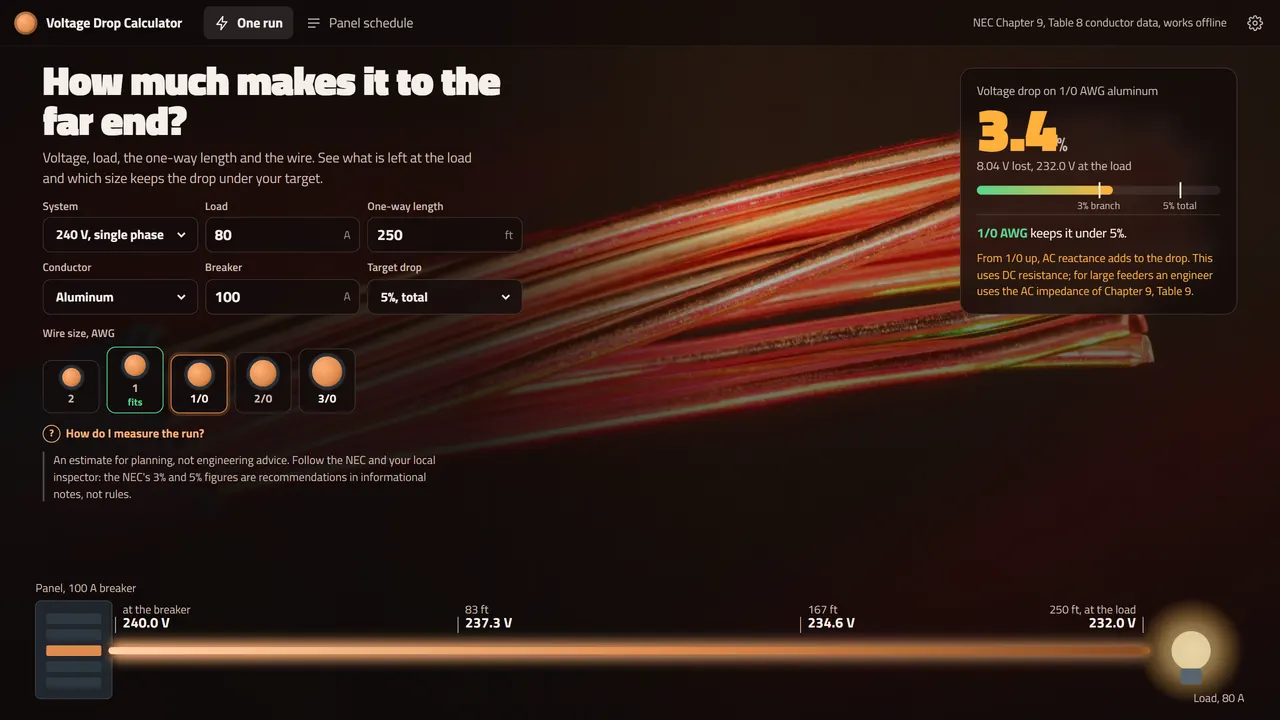
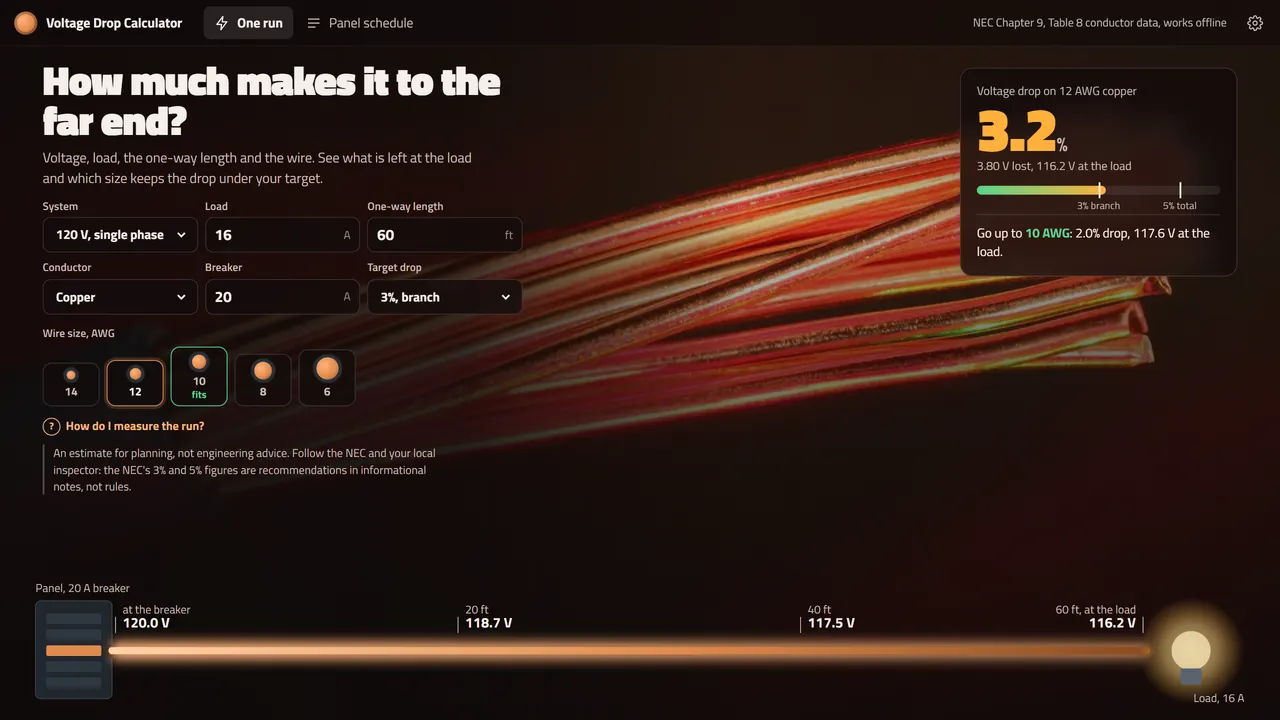
One way, from the breaker to the load, along the route the cable actually takes: up the wall, across the attic, down again. Not a straight line and not doubled; the calculator counts the return wire. For the load, use the nameplate amps of what it feeds, or for a receptacle circuit the load you expect to plug in.
How is the drop worked out?
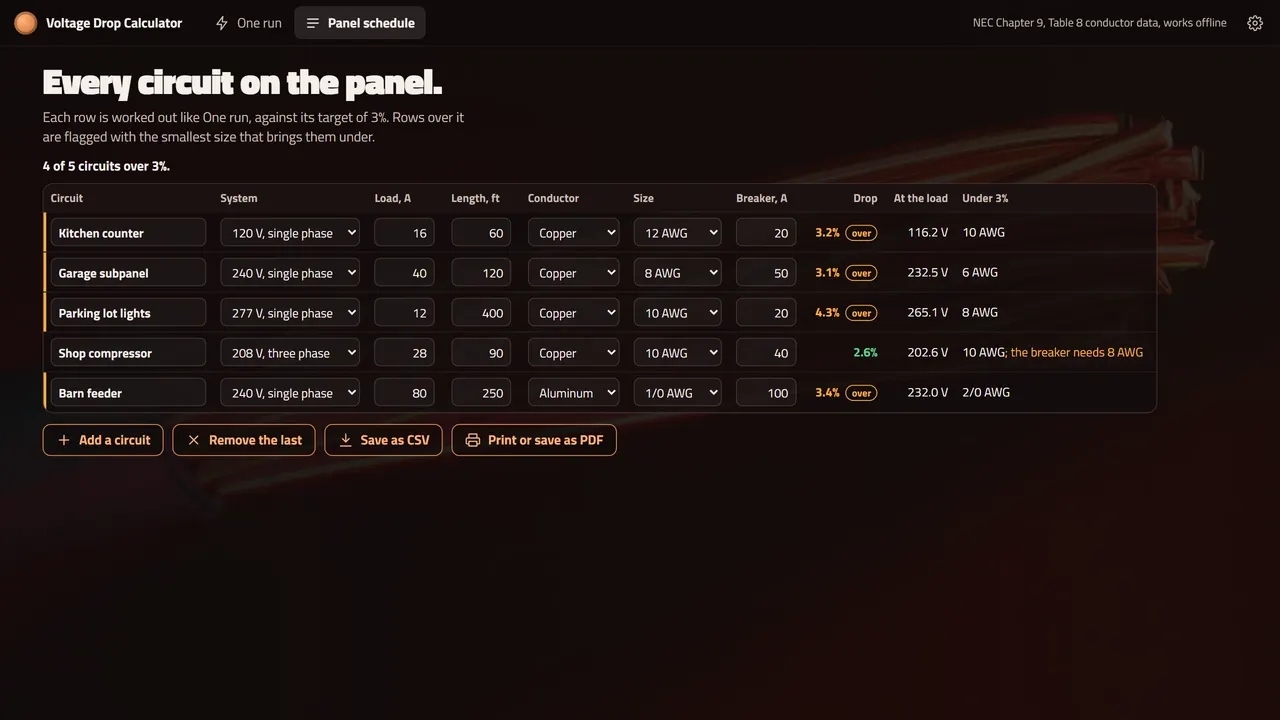
Single phase and DC: 2 × amps × resistance × one-way length / 1,000. Three phase: √3 × amps × resistance × length / 1,000. Resistance is the DC resistance at 75 °C in ohms per 1,000 feet from NEC Chapter 9, Table 8, stranded copper or aluminum.
Is 3% a code requirement?
No. The NEC recommends at most 3% on a branch circuit and 5% for feeder and branch together, in informational notes, which are not rules. Some equipment and some jurisdictions ask for less. Your inspector decides.
Does it size the wire for ampacity?
That is a separate check. Type the breaker and the app warns when the wire is too small for it, using the 75 °C column and the small-conductor limits, without temperature or conduit-fill corrections. Large AC feeders: from 1/0 up, reactance adds to the drop, and the app says so.
Is what I enter sent anywhere?
No. The conductor data is inside the app and everything is worked out in your browser. Your circuits stay on your PC.